


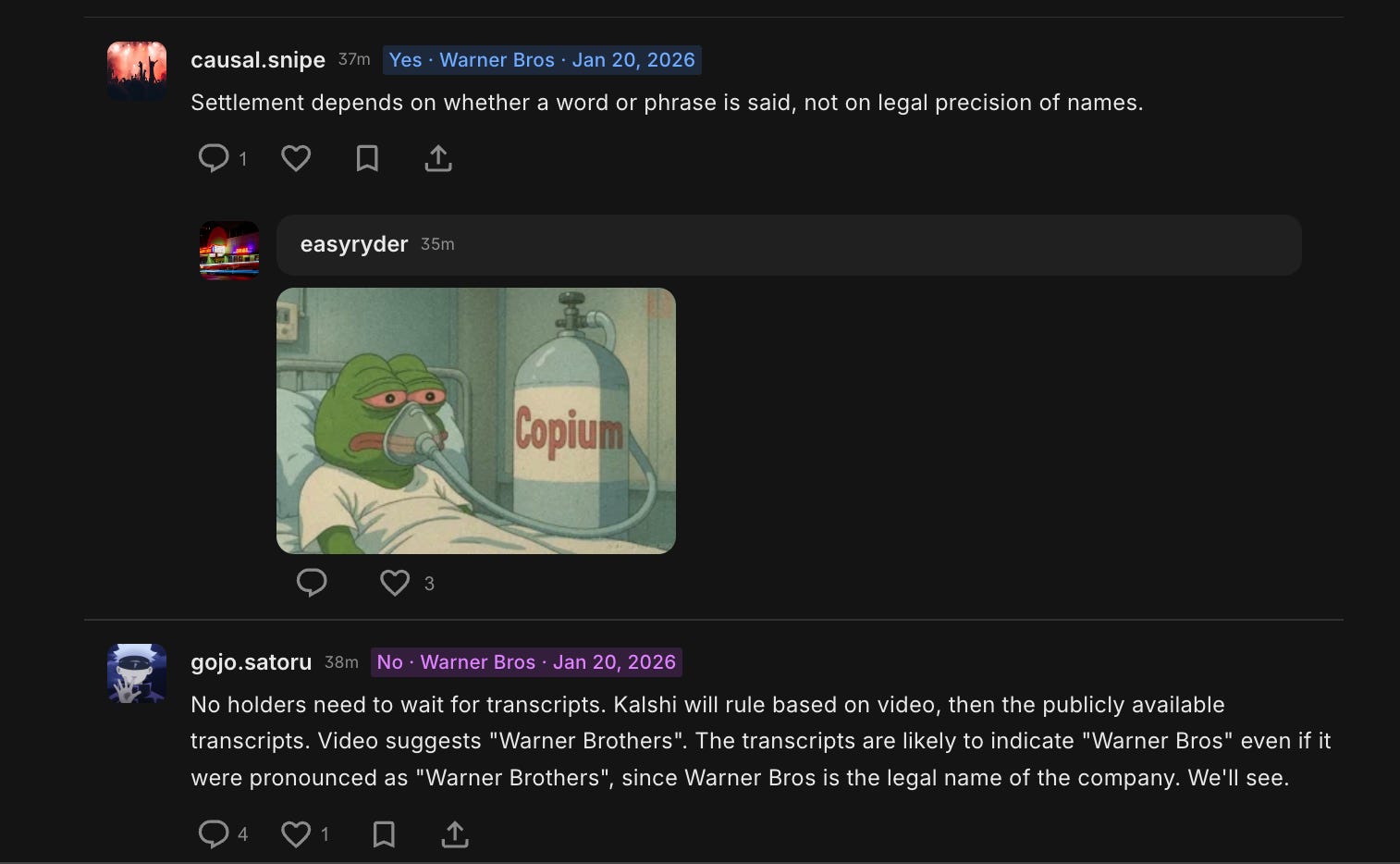
A recently closed mention market on Kalshi just delivered a masterclass in why you should read the fine print. I’ve said this numerous times, on pretty much all of my Kalshi / Event-Contract articles.
READ.
THE.
RULES.
The setup was simple: bet on whether a speaker would say “Warner Bros” during a public address. The speaker mentioned “Warner Brothers.” The contract is now in limbo—and traders are learning an expensive lesson about the difference between common sense and contractual language.
The Literal vs. The Obvious
On its face, this feels absurd. Warner Bros is Warner Brothers. Same company. Same referent. If you asked anyone on the street whether the speaker “mentioned Warner Bros,” they’d say yes without hesitation.
Again, this is why it is absolutely vital that you READ THE RULES.
The rulebook is explicit about what counts:
✅ Plurals and possessives — “Immigrants” counts for “Immigrant”
✅ Hyphenated compounds — “pro-Palestine” counts for “Palestine”
✅ Homonyms — “ice water” counts for “ICE”
❌ Grammatical inflections — “Immigration” doesn’t count for “Immigrant”
❌ Homophones — “right” doesn’t count for “write”
Notice what’s missing? Any provision for abbreviations and their expansions.
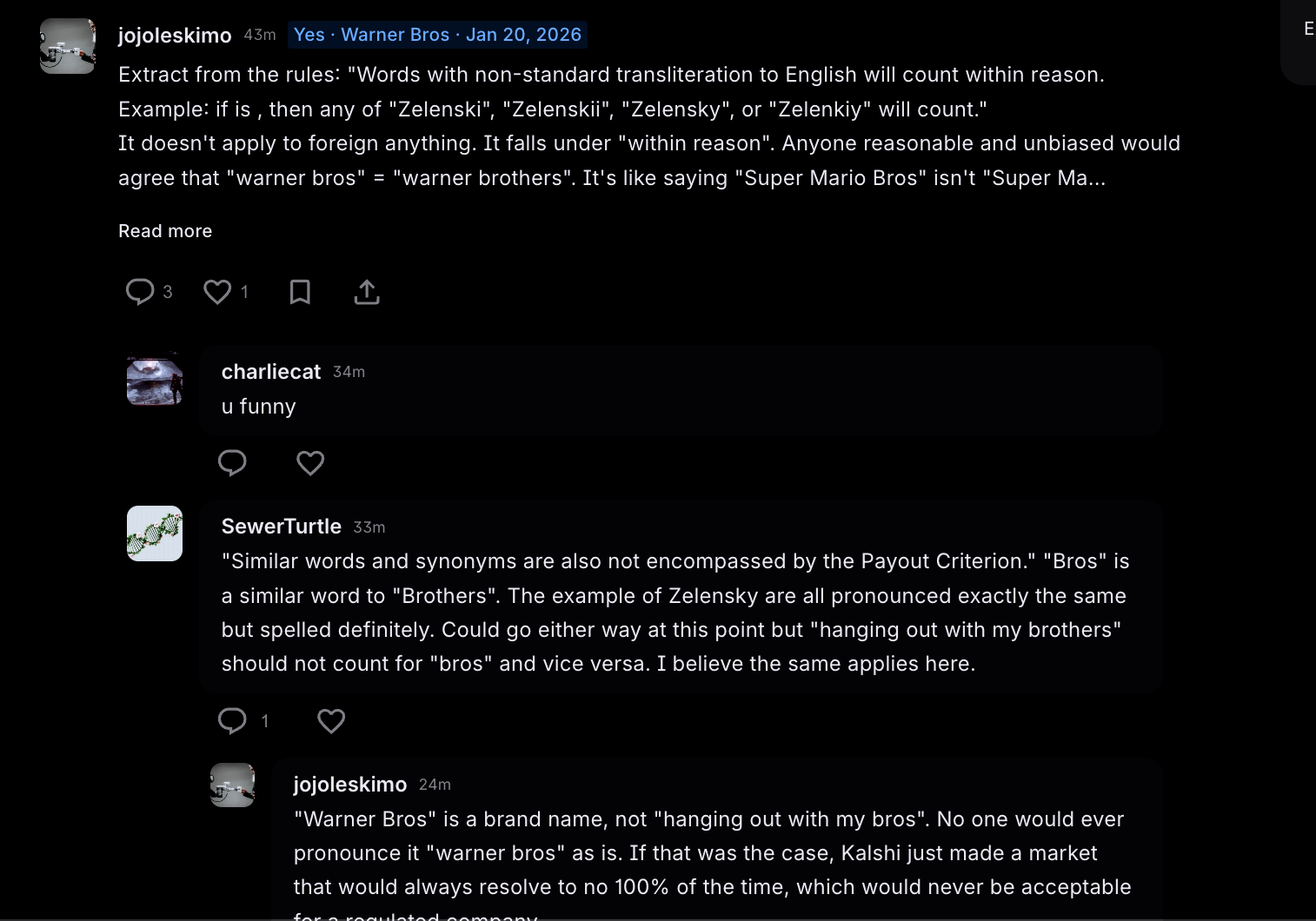
The NO Case is Stronger
The rules use slashes to indicate alternatives: “Elon / Musk” and “Doge / Dogecoin” appear as examples. If Kalshi intended both “Warner Bros” and “Warner Brothers” to resolve the market, they had a clear mechanism to say so.
They didn’t. And I will play devil’s advocate that Kalshi should’ve included the / in the market and named it Warner Bros / Warner Brothers… but they didn’t.
With that in mind the YES side will argue intent, common understanding, and the “spirit” of the market. They’ll point to the transliteration rule allowing variations of “Zelensky” and claim this is analogous.
But here’s the problem: “Zelenski” and “Zelensky” are spelling variations of the same word. “Bros” and “Brothers” are different words entirely—one is an abbreviation, the other is the full form. The rules are strict everywhere else. Why would this be the exception?
The Precedent Problem
If “Warner Brothers” counts for “Warner Bros,” where does it stop?
Does “United States” count for “US”?
Does “okay” count for “OK”?
Does “cryptocurrency” count for “crypto”?
Markets need predictable rules. The moment you start adjudicating based on “reasonable interpretation” rather than textual analysis, you’ve created uncertainty that makes these contracts harder to price.
What Happens Next
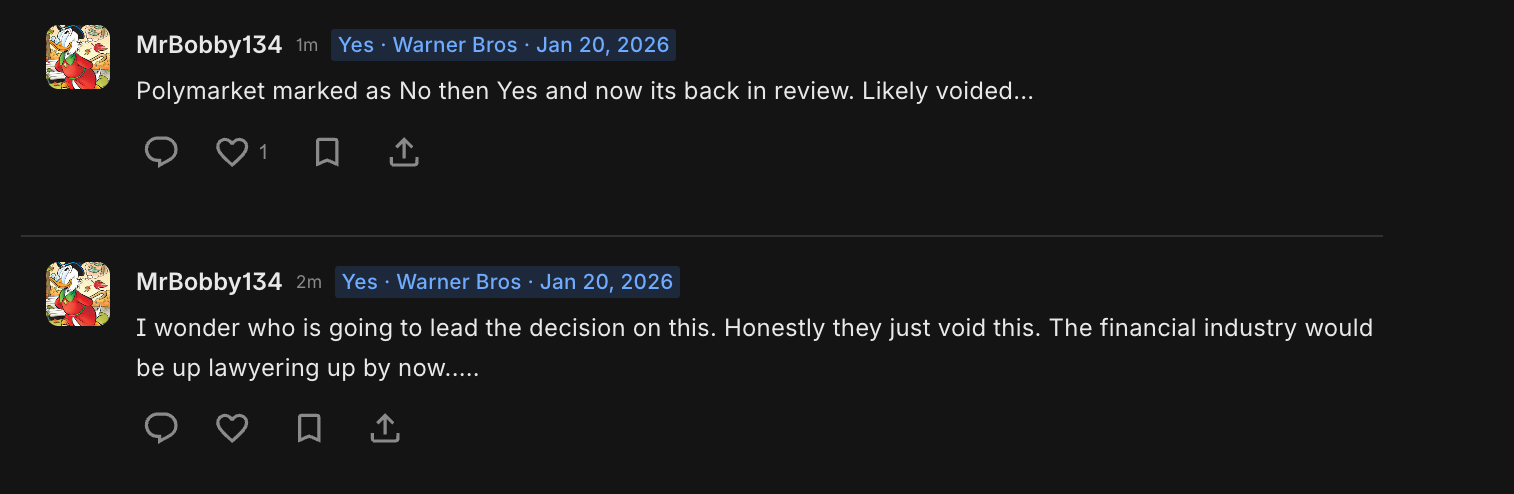
Expect a support ticket war. Traders on both sides will make their case, and Kalshi will have to rule.
My read: the NO side should prevail on a strict textual interpretation. But this is Kalshi—outcomes aren’t always predictable, and “common sense” arguments have swayed resolutions before.
In very rare cases, Kalshi reserves the right to “wash” the market and void every parties trade. This would result in all shares being “burned” and allocated capital returned to traders—granted they held to expiration.
Either way, this market is a reminder: in prediction markets, the edge isn’t just in forecasting events. It’s in forecasting how the rules will be applied to those events.
What’re your thoughts? Do you think YES or NO holders should be paid?
This article is for informational and educational purposes only and does not constitute investment advice, trading advice, or a recommendation to buy, sell, or hold any position in any event contract or financial instrument. Event contracts traded on CFTC-regulated exchanges like Kalshi involve risk, including the potential loss of your entire investment. Past performance is not indicative of future results.
Readers should conduct their own research and consult with a qualified financial advisor before making any trading decisions. The views expressed are solely those of the author and do not represent the views of any exchange or regulatory body.
Event contract rules and settlement outcomes are determined solely by the relevant exchange. The author’s interpretation of contract rules is opinion only and should not be relied upon for trading decisions.
Position Disclaimer: The author of this article holds NO “Warner Bros” contract(s.)